

If Japan keeps coming up in your board meetings, the first question is almost always the same: what will it actually cost to test demand here?
The honest answer is that there is no single price tag — the right budget depends entirely on your category. But there is a clear way to size it. “Advertising in Japan” is really three separate costs stacked on top of each other: media spend, the people who run it, and the localization that makes any of it work. Overseas teams routinely budget for the first, underestimate the second, and forget the third. This guide gives you a framework for all three, so you can scope a realistic test instead of guessing.
The three costs, separated
Before you can size a budget, separate what you are paying for:
- Media budget — the money that goes directly to Google, Yahoo! JAPAN, Meta, LINE, and other platforms. This buys impressions and clicks.
- Management — the team (in-house or agency) that builds campaigns, writes ad copy, sets targeting, and optimizes daily.
- Localization — the landing page, ad creative, and tracking setup that turn traffic intent into Japanese conversions.
Skip any one of the three and the other two are wasted. A large media budget pointed at a poorly localized landing page burns cash. A perfect landing page with no one optimizing the accounts stalls within weeks.
What actually drives the media budget
There is no universal figure here, because cost-per-click in Japan swings enormously by category. A niche industrial keyword and a competitive SaaS or finance term can differ by an order of magnitude. So instead of a headline number, size your media budget against the factors that actually move it:
| What raises your cost | What lowers it |
|---|---|
| Competitive, high-intent keywords (finance, SaaS, legal) | Niche or specialist categories with less bidding pressure |
| Broad national targeting from day one | Tight targeting on your highest-intent audiences |
| Running many platforms in parallel | Starting on the one or two platforms your buyers actually use |
| A long, considered B2B sales cycle | A shorter path from click to conversion |
The one rule that holds across categories: starting too small to learn anything is the most expensive mistake of all. A test needs enough volume to reach a real signal on which keywords, audiences, and messages convert. Under-funding it produces noise, and noise is money spent with nothing to show.
The yen advantage in 2026
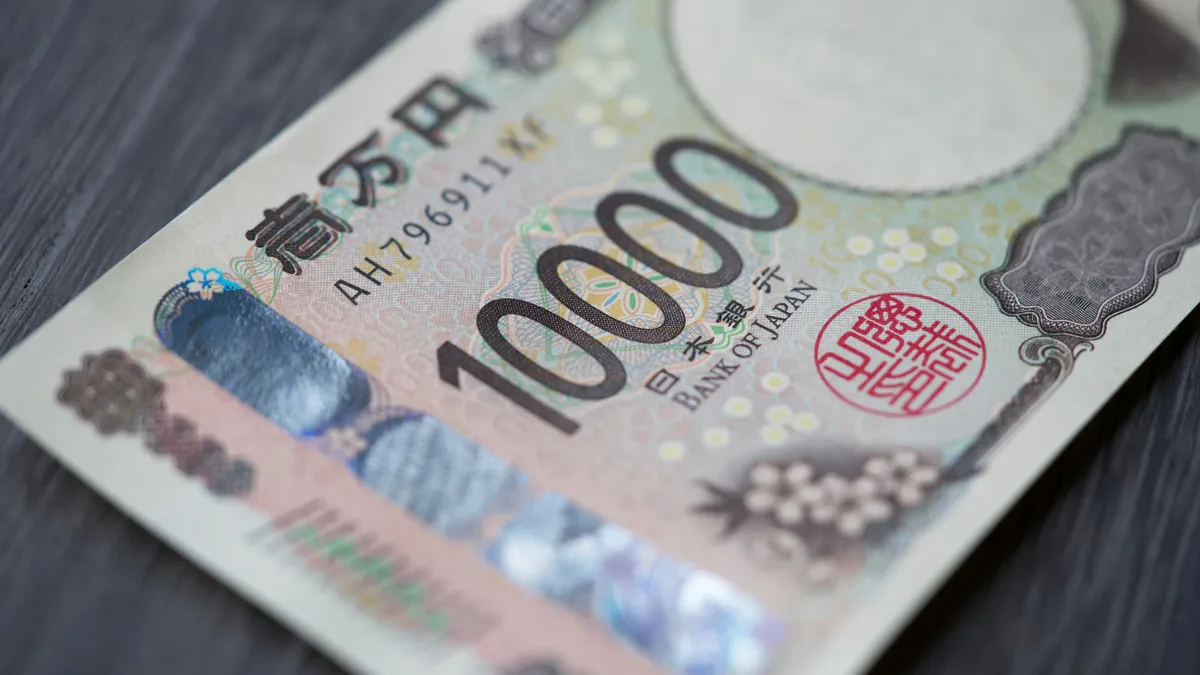
There is a genuine, time-sensitive tailwind. With the yen near multi-decade lows against the dollar and euro, a given media budget converts into more reach in Japan than it did a few years ago. For a company billing in stronger currency, the effective cost of buying a Japanese customer is lower than it looks on a yen-denominated invoice. That is a real reason to test sooner rather than later — the window is a currency condition, not a permanent one.
Management: in-house vs. agency vs. partner
Someone has to run the accounts every day. You have three options, each with a different cost shape.
Hire locally
A skilled bilingual Japanese marketer is expensive and hard to find — and even harder to justify before you know Japan will work. You commit to a salary, benefits, and ramp-up time before you have a single data point.
Use a Japanese agency
Agencies typically charge either a percentage of your media spend or a fixed monthly retainer. The trade-off is that many report only in Japanese and sell narrow tactics — ad operations — rather than the full path to a sale.
Use a bilingual partner
A partner who reports to your HQ in English and takes on strategy, operations, and localization together removes the coordination tax of managing a Japanese vendor from abroad. At LOads, this is the model: a fixed monthly fee, with the ad budget paid directly from your own accounts so you keep full ownership and visibility of the data.
The cheapest management option on paper is rarely the cheapest in outcome. What matters is cost per qualified result, not cost per hour.

Localization: the cost everyone forgets
This is where overseas budgets quietly break. Translation is not localization.
A Japanese landing page that reads like a translated foreign page will convert poorly no matter how good your traffic is. Real localization means:
- A landing page built to convert in Japan, not a translated clone of your English site
- Ad copy written for Japanese search intent, not run through machine translation
- Conversion tracking (GA4 / GTM) wired to real business outcomes, not just page views
- Bilingual follow-up so inbound Japanese inquiries do not stall waiting on your HQ
Budget for this as a real line item. It is usually a one-time build plus ongoing iteration, and it is the difference between a test that produces a clear answer and one that produces noise.
Putting it together: scope, don’t guess
Because the media number depends on your category, the useful next step is not a spreadsheet of assumptions — it is a scoped read of your specific situation. That is exactly what a demand test is for.
At LOads, we start with a pre-engagement consultation: we assess whether your product can be shaped for the Japanese market, scope the media budget and platforms to your category, and only take on what we are confident we can sell. Your free pre-consultation includes a Japan market report and one strategy meeting — enough to replace guesswork with a real number.
The output of the test itself is not just traffic. It is an evidence-based go / wait / pivot decision: is there real Japanese demand for what you sell, does it convert, and is Japan worth a deeper investment before you incorporate or hire.
Frequently asked questions
Do we need a Japanese entity before we can advertise?
No. You can run a properly structured demand test — including localized landing pages and paid campaigns — before you incorporate or hire locally. That is the entire point of testing first: you invest on evidence, not assumptions.
Who pays for the media budget?
Ideally, you do, directly from your own ad accounts. That keeps full ownership and visibility of the data with you. A good partner charges a separate management fee and does not mark up your media.
How fast can we see results?
Early signal on which keywords and audiences convert usually appears within the first few weeks. A confident go / wait / pivot read typically needs a few months, depending on your budget and sales cycle.
Why is now a good time to test Japan?
The yen sits near multi-decade lows against major currencies, so a foreign budget buys more reach in Japan than it has in years. Testing now lets you validate demand while acquisition costs are, in your home currency, unusually low.
Get a free Japan opportunity brief — a market read and one strategy call, in plain English.
Get your free brief →